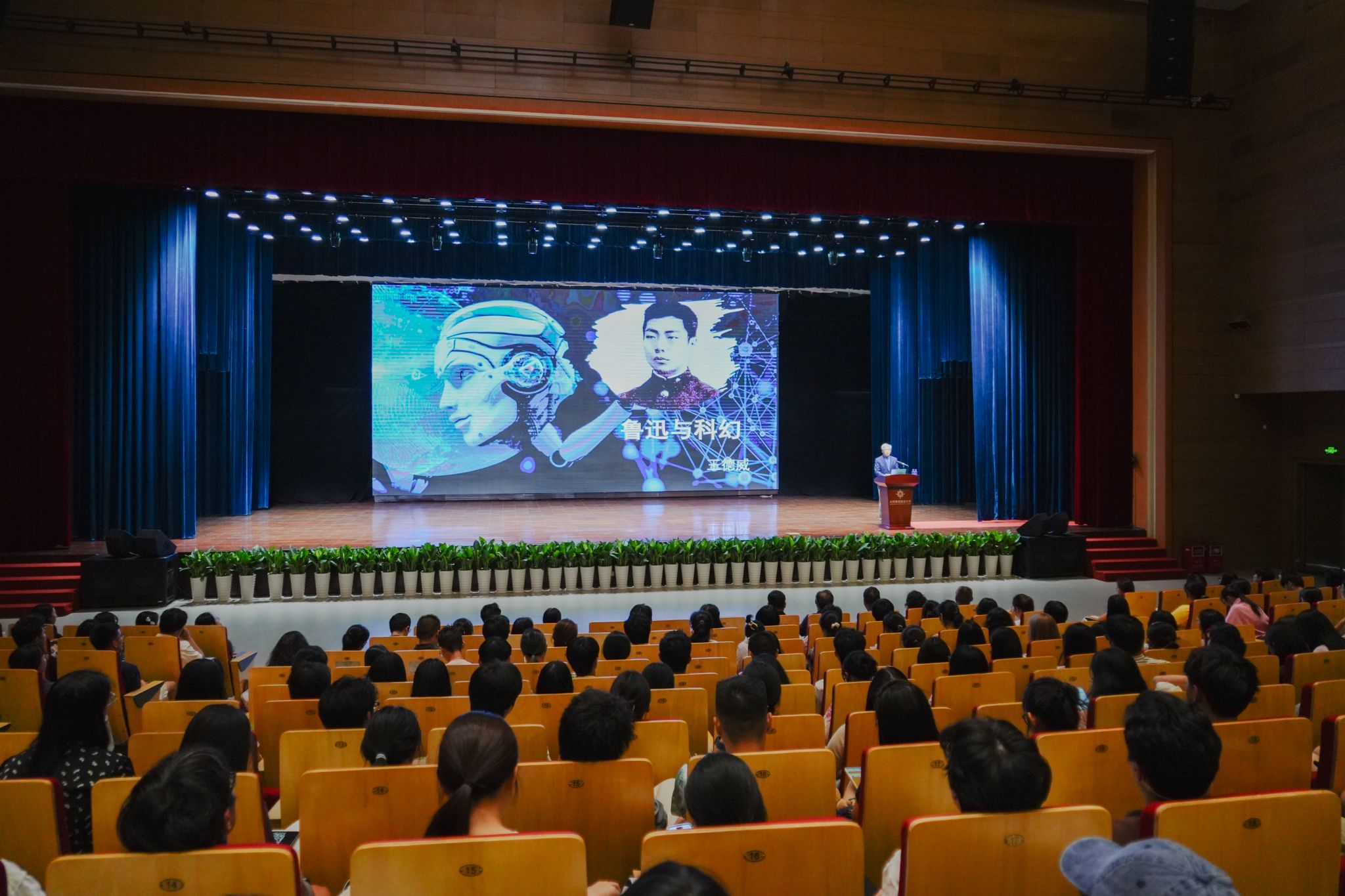
On 9 September, Prof David Der-wei Wang, Edward C. Henderson Professor of East Asian Languages and Civilisations and of Comparative Literature at Harvard University, returned to Beijing Normal-Hong Kong Baptist University (BNBU) to deliver a lecture titled “Lu Xun and Contemporary Science Fiction”.
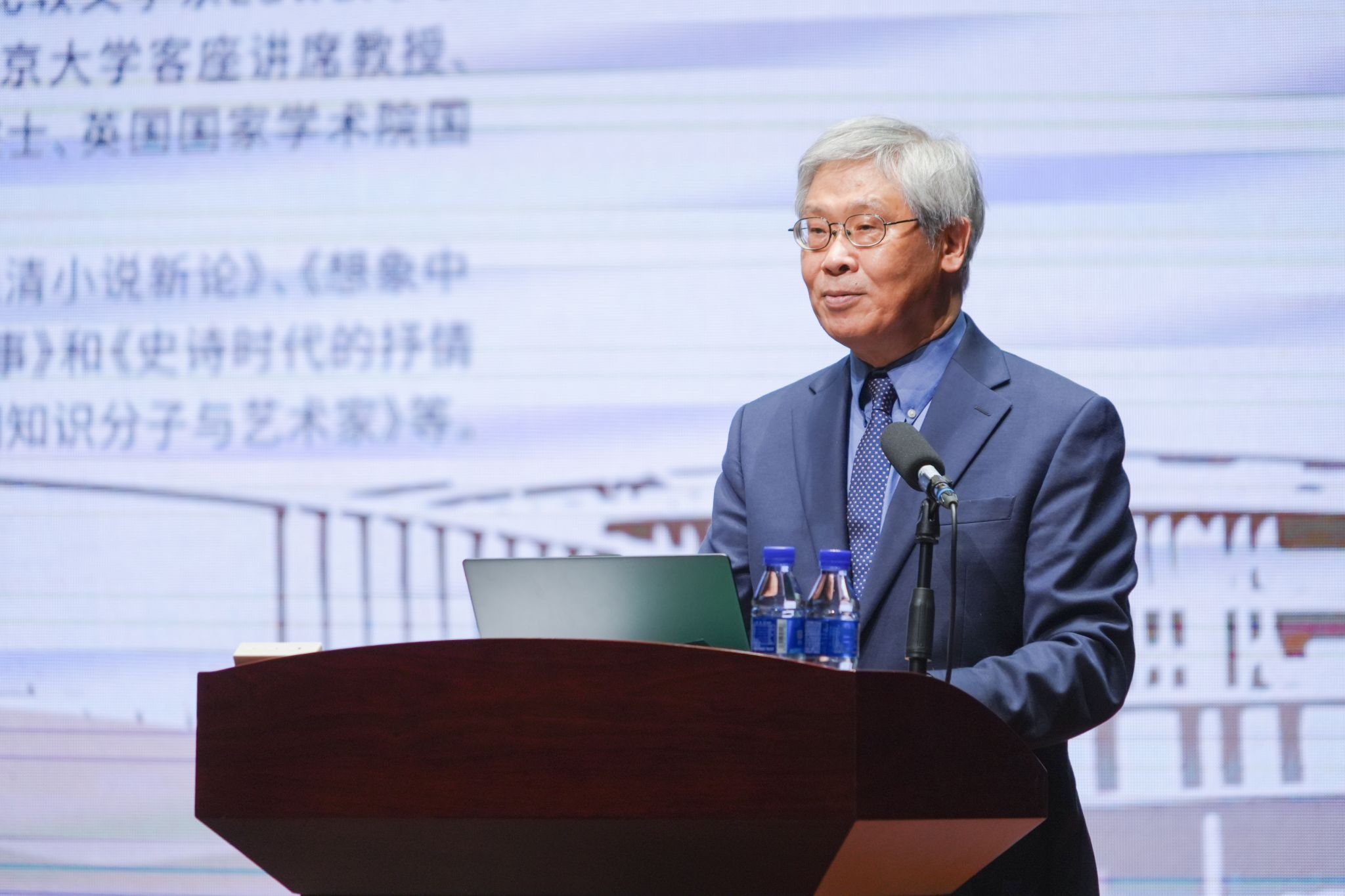
Prof David Der-wei Wang at BNBU
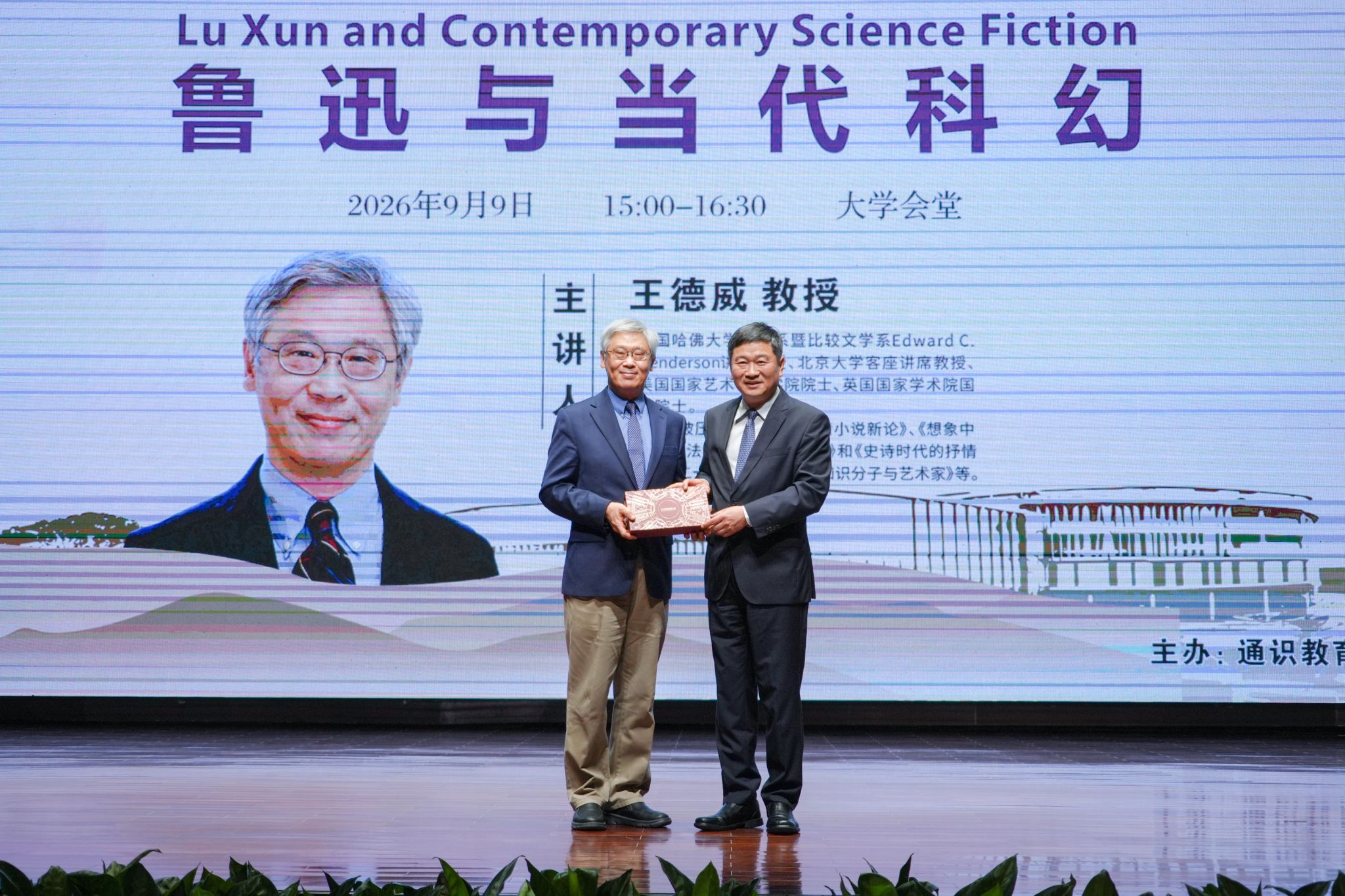
Prof Wang with BNBU President Prof Chen Zhi
More than a century ago, the young Lu Xun translated Jules Verne’s science fiction novels into Chinese, seeing science fiction not only as a source of imagination but also as a means of inspiring new ways of thinking about China’s future. Drawing on this history, Prof Wang explored the continuing significance of science fiction and how it can help us imagine the future.
He highlighted the concepts of “神思” (shensi), or imaginative thought, and “悬想” (xuanxiang), or speculation about new possibilities, from traditional Chinese literary thought. In Lu Xun’s view, imagination could enable people to move beyond established assumptions and discover new possibilities, a capacity shared by both scientific discovery and literary creation.
Tracing the development of Chinese science fiction from the late Qing period to contemporary works such as Liu Cixin’s *The Three-Body Problem*, Prof Wang noted how generations of writers have used science fiction to envision alternative futures and explore questions about humanity and civilisation.
Turning to the age of artificial intelligence, he encouraged students to think beyond predefined understandings of AI and explore its broader possibilities. Literature, he suggested, plays an important role in expanding rather than simplifying our questions about the future.
“Imagining the future is where creativity begins,” Prof Wang said.
From MPRO
Editor: Cecilia Yu


