In Australia, she is a bridge between the industrial and the academic; in Europe, a co-founder of the International Conference on Service-Oriented Computing; and globally, she has been recognised by Stanford University as one of the top 2% of scientists for consecutive years……
She is Yang Jian, a professor and world-recognised data scientist. As her footprint extends into the Guangdong-Hong Kong-Macao Greater Bay Area, she joined Beijing Normal-Hong Kong Baptist University (BNBU) in 2026, where she serves as Acting Dean of the Faculty of Science and Technology (FST) and Associate Dean of the School of AI and Liberal Arts (SAI).
Her mission is clear: to strengthen interdisciplinary collaboration and to solve real world problems, while preparing students for an AI-driven future.
BNBU, a platform ready for greater recognition
What struck Prof Yang most about FST was not its size, but its structure.
Unlike other universities that separate their programmes into different faculties, BNBU gathers nine programmes under one roof, including Applied Mathematics, Financial Mathematics, Statistics, Data Science, Artificial Intelligence, Computer Science and Technology, Environmental Science, Food Science and Technology, and Applied Psychology.
“We are of a relatively small size, but that also is our advantage. It eases the barriers for interdisciplinary collaboration,” she said.
At FST, most of the team from different programmes work on the same floor. In this way, physical distance is reduced, enabling more ideas to come together to form a bigger picture.
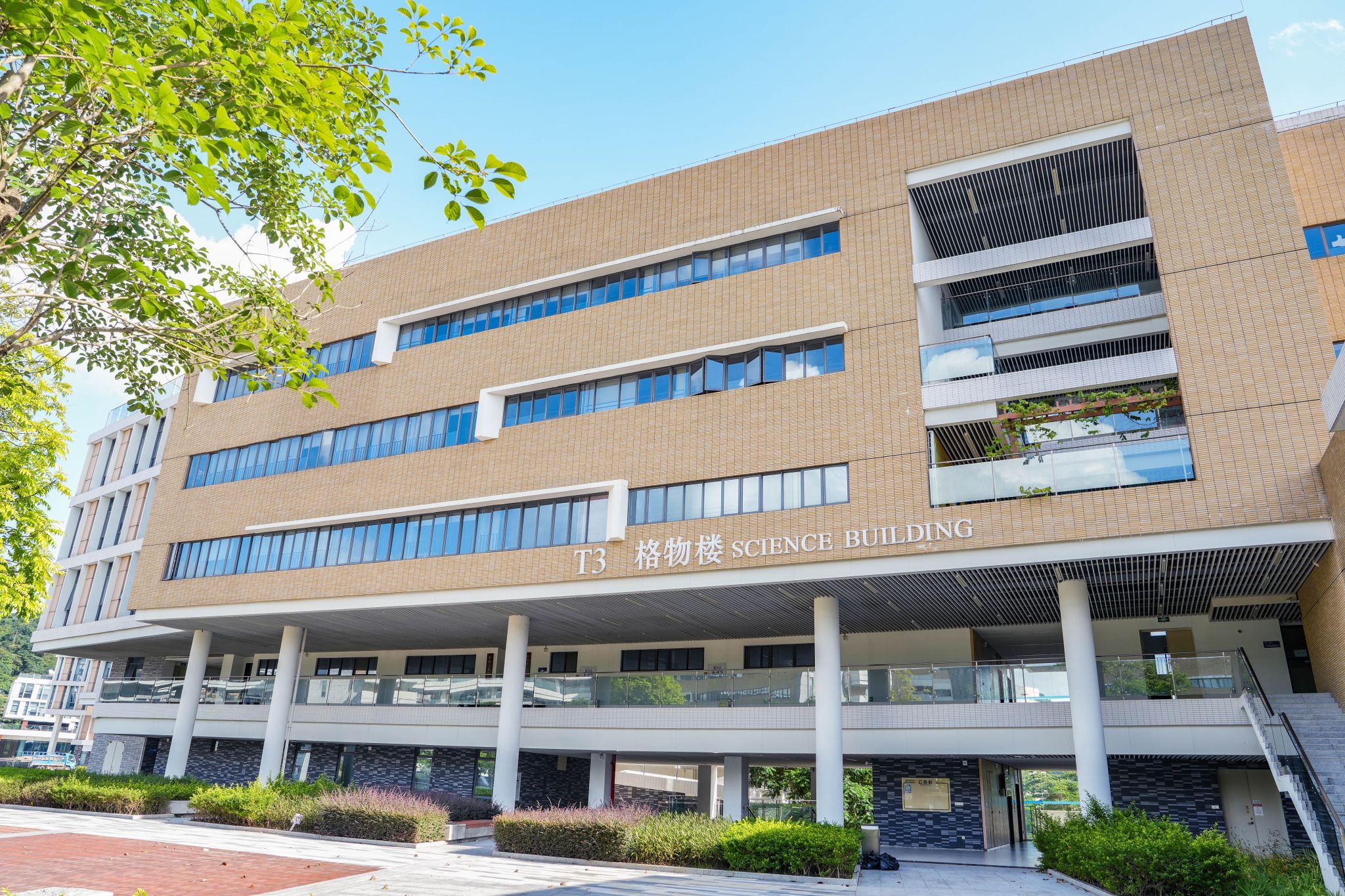
BNBU's Faculty of Science and Technology
In Prof Yang’s opinion, the Faculty is well-positioned to promote interdisciplinary research and education to solve real-world problems, and it has already made notable progress.
In March 2026, BNBU entered the global top 1% of the Essential Science Indicators in the field of Engineering, reflecting the combined strength of multiple programmes, including Artificial Intelligence, Data Science, and Computer Science and Technology. Previously, it was also recognised in Agricultural Sciences, supported by its Food Science and Technology Programme.
For Prof Yang, these achievements reflect the collective strength of multiple disciplines working together. Looking ahead, she hopes to make collaboration even more embedded in daily academic life.
“We should create more opportunities for faculty to share what they can do, what tools they have, what problems they can tackle, and see how we can work together,” she said.
At the same time, she plans to raise BNBU’s academic profile by hosting high-level forums and bringing international conferences to campus. “A university like this deserves to be better known,” she said.
As for talent cultivation, Prof Yang emphasises that she will continue to maintain and optimise the Faculty’s high-quality education, especially for undergraduate studies. In the near future, she looks forward to recruiting more scholars from Australia, Europe and beyond.
She also added that new programmes are under consideration to promote the deep integration of AI into talent development at BNBU.
Learn to ask questions in the AI era
When asked about the impact of AI on STEM education, as the faculty leader and Associate Dean of SAI, Prof Yang’s answer is both direct and thought-provoking.
“What we need now are people who can discover problems and ask questions,” she said.
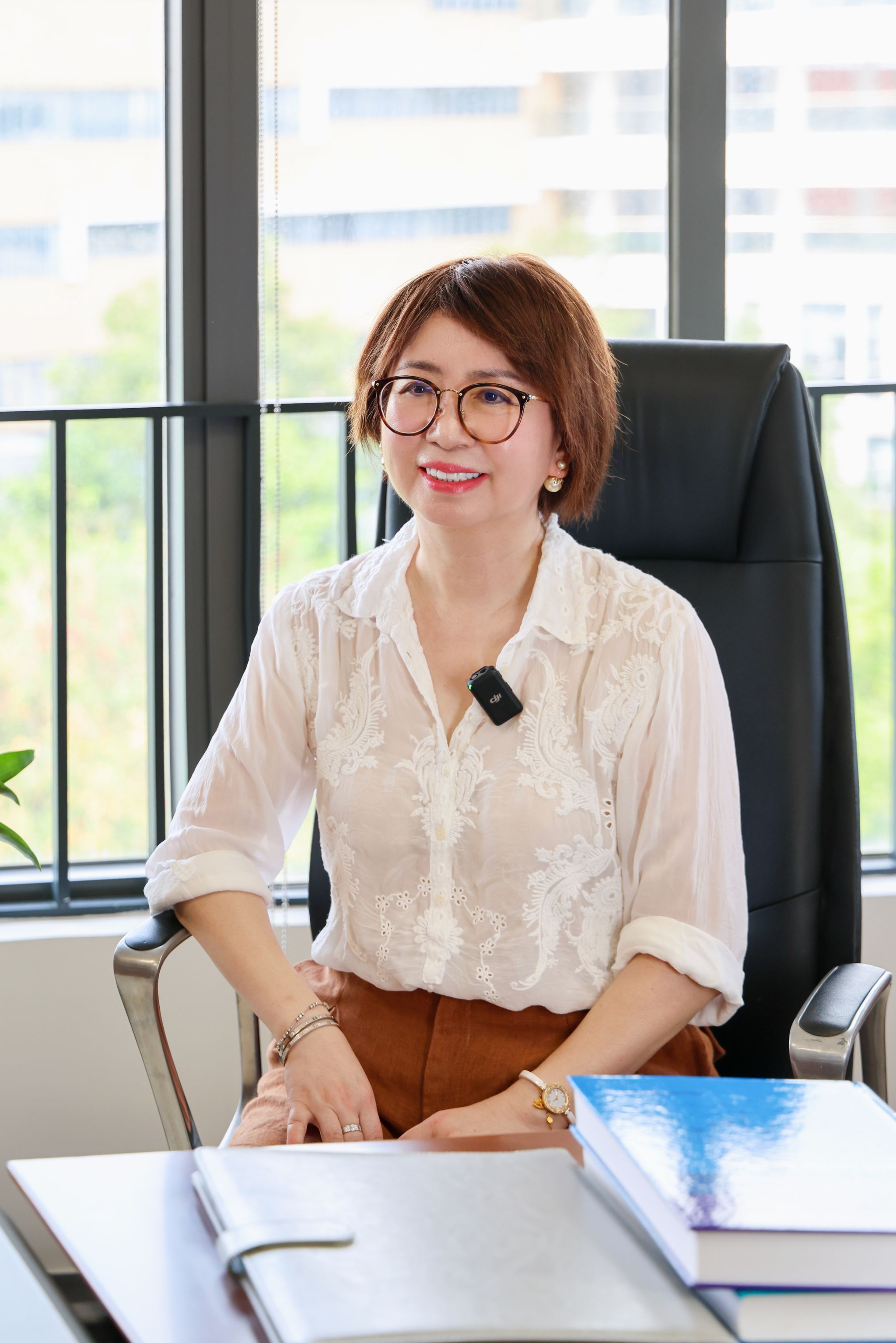
Prof Yang Jian during the interview
“The current AI models are so good at knowledge searching and solving well-defined problems. That’s why it’s crucial for us to inspire our students to identify critical and meaningful problems worth solving.”
She continued to point out that to utilise AI’s capacity for personal development, asking questions is not enough; students should also learn to formulate insightful assumptions, submit their questions to AI models, and evaluate the outputs.
“So that one can lead and control AI,” she said.
To achieve such an objective, three essential qualities are required: taste, communication skills, and empathy. She elaborated on it further.
Taste underpins critical thinking and judgement. She encourages people to use more AI models, so they can compare and identify each model’s strengths and weaknesses. “Even with AI, you still need a strong foundation,” she added. “If AI gives the wrong answer, you need to know how to recognise it and why it happened.”
Communication is equally critical. One should learn not only how to speak with other people, but also with AI. “The same task, when described differently, can lead to completely different results,” she said. “Clarity matters.”
Above all, she emphasises empathy, the ability to understand others and work effectively in teams, be kind to others. “It is about respecting and valuing differences among people. This is something AI cannot replace,” she noted.
These, she believes, are precisely the qualities that liberal arts education aims to cultivate.
“Liberal arts education is about educating students to be better person, someone who can adapt to and contribute to a changing society over time,” she said.
Her own career reflects this philosophy. From academia to industry collaboration, from Australia to Europe, and now back to China, each transition required stepping into the unknown.
“Change can be a little scary,” she admitted with a smile. “But once you take that step, you realise it’s not so difficult.”
Her advice to students is simple but powerful:
“Be brave and trust yourself. You are far more capable than you think.”
From MPRO
Reporter: Cecilia Yu and Koga Song
Photo by Hanna He, Koga Song
Video by Season Li, Owen Li, Cecilia Yu


