As debates over artificial intelligence reshape the future of higher education, Prof Tang Beibei steps into her new role as Dean of the Faculty of Humanities and Social Sciences at Beijing Normal-Hong Kong Baptist University (BNBU).
A sociologist and leading scholar in China Studies, she brings an international academic background spanning China, the UK, and Australia. Now, as a dean at BNBU, at a time when concerns about AI’s impact on humanity are growing, how does she respond? And where is she leading the Faculty?
We should be inclusive, balanced, and updated
In Prof Tang’s opinion, the current wave of change brings more opportunities than threats to the humanities and social sciences, provided the field takes the initiative to align with technological trends. “We will adapt ourselves and even take advantage of the changes, and I have total confidence in our future ahead,” she said.
“A good humanities and social sciences education requires inclusivity and balance, which is embodied in four fundamental dimensions: tradition and modernity, theory and practice, school and society, local and global.”
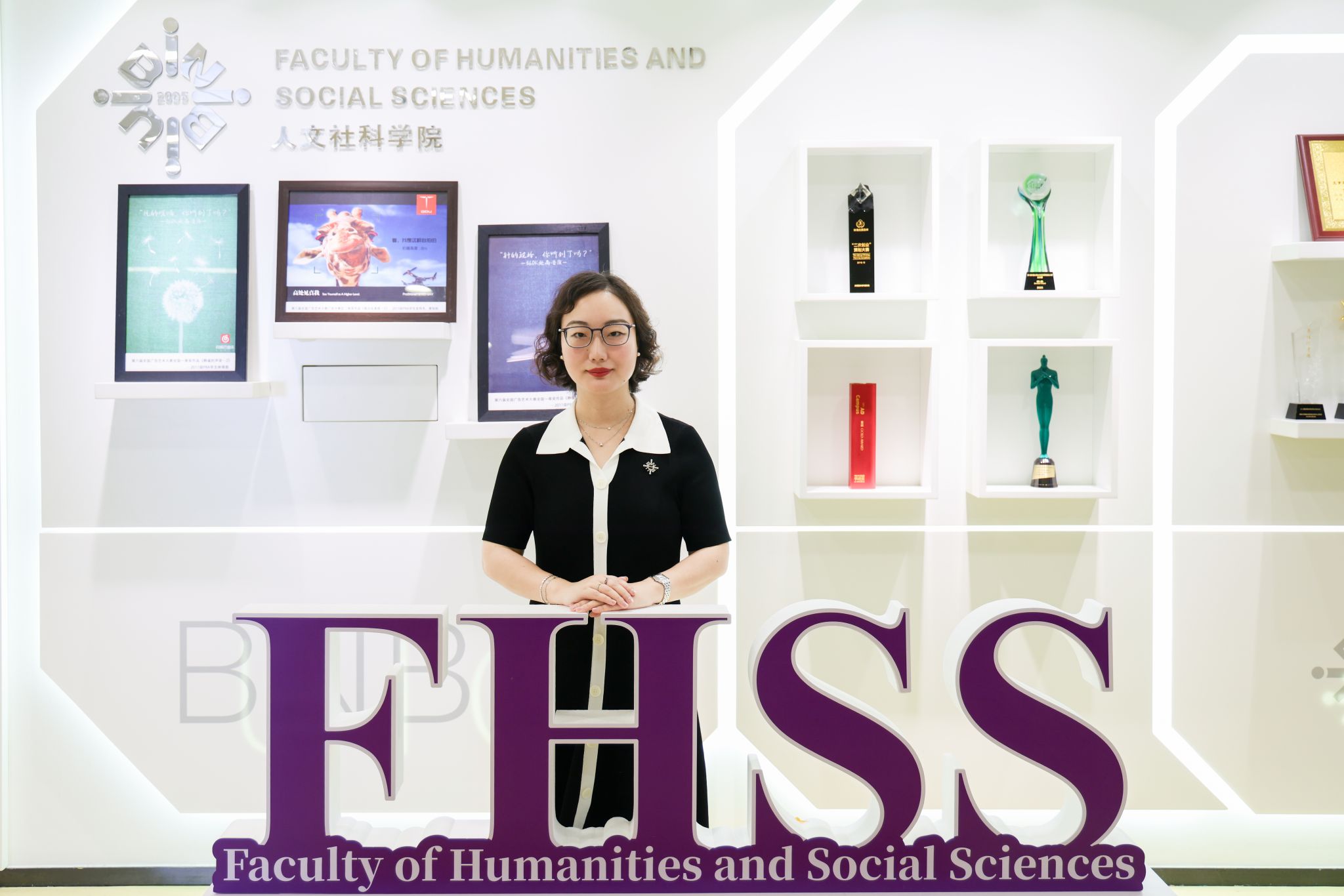
Dean of BNBU's Faculty of Humanities and Social Sciences Prof Tang Beibei
This vision is already taking shape within the Faculty.
FHSS’s programmes, delivered across three departments, currently span areas including communication, languages and culture, and social sciences, cultivating students with both local insights and global perspectives. Prof Tang pointed out that the programmes have and will continue to adopt more digital teaching and research approaches, laying the foundations for interdisciplinary integration.
She further added that two new undergraduate programmes will be launched in September this year, Digital Intercultural Studies and Transdisciplinary Digital Humanities. These will complement the existing Digital Social Sciences programme to form a cohesive system, thereby achieving a deep integration of the humanities and social sciences with digital technology.
“We aim to break down barriers between disciplines and departments, with courses being delivered jointly by scholars from diverse academic backgrounds,” she said.
Teaching innovation will also be a key priority. Prof Tang shared that FHSS plans to introduce more project-based assessments to encourage students to develop problem-solving, teamwork, and independent thinking skills. Digital tools will further enhance classroom experiences, while partnerships with industry and local communities will provide students with more opportunities for real-world engagement.
The Faculty will enhance the teaching feedback mechanism involving both faculty and student representatives, enabling timely responses to students’ needs and ensuring continuous improvement.
“We also aim to attract more talented scholars,” Prof Tang said. She looks forward to recruiting more outstanding academics with interdisciplinary backgrounds and expertise in digital humanities and social sciences, and to providing greater support to academics to produce more high-impact research output.
Our students have unlimited potentials
When it comes to academic study and research, Prof Tang has solid experience to share.
One of her pieces of practical advice is aimed at undergraduate students. To build an interdisciplinary knowledge system, she advises students to first establish a strong foundation in their own discipline. From there, they should actively explore other fields, integrate learning through practice, and engage with peers and faculty from diverse backgrounds.
For those who aspire to pursue research, she emphasises the importance of identifying their research interests, aligning them with real-world social needs, and strengthening theoretical foundations and methodologies. Equally essential, she continues, are curiosity and a strong sense of responsibility, both of which serve as lasting sources of motivation.
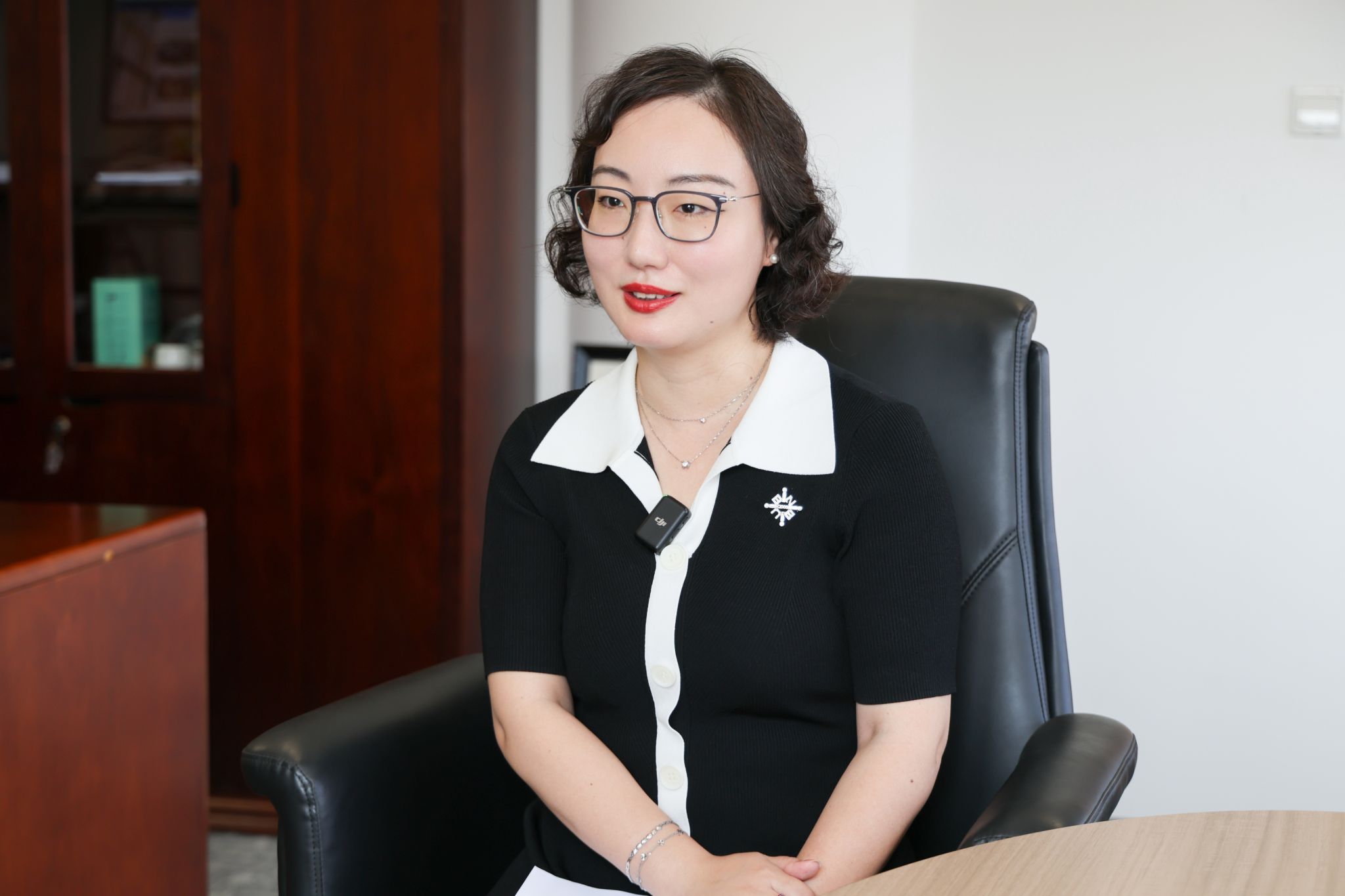
Prof Tang Beibei in the interview
These principles are not just advice. They reflect her own academic journey, as she got degrees from Wuhan University, the University of Oxford, and the Australian National University.
Her research has consistently focused on social change and social development, and her academic training has enabled her to interpret the unique dynamics of China’s social development through frameworks that resonate with the international academic community.
Today, the research potential and dynamic development of the Guangdong-Hong Kong-Macao Greater Bay Area have inspired her to embark on a new academic chapter.
More importantly, she sees in BNBU students the true realisation of a liberal arts education. “They are passionate, diligent, and courageous in pursuing their dreams. They have limitless potential,” she said.
“I hope they remain rooted in China, with a strong sense of responsibility to contribute to their families, communities, society, and the nation, and become citizens with both global vision and dedication to the local communities and society,” Prof Tang added.
This, she believes, is the ultimate aspiration for the humanities and social sciences education at BNBU.
From MPRO
Reporter: Cecilia Yu
Photographer: Hanna He
Video by: Owen Li, Hanna He, Season Li, Cecilia Yu, Juan Rengifo


